Detecting AI-generated content
A text detector cannot tell you whether a piece of writing came from a machine or a person, and OpenAI shut its own tool down for exactly that reason. What can be checked is a mark the maker deliberately embedded in the output, or a credential attached to the file; the rest is a guess, however many decimal places it is printed with.
- Lesson 11 of 15
- Intermediate
- Free, no signup
From a mark you can read to a number you cannot
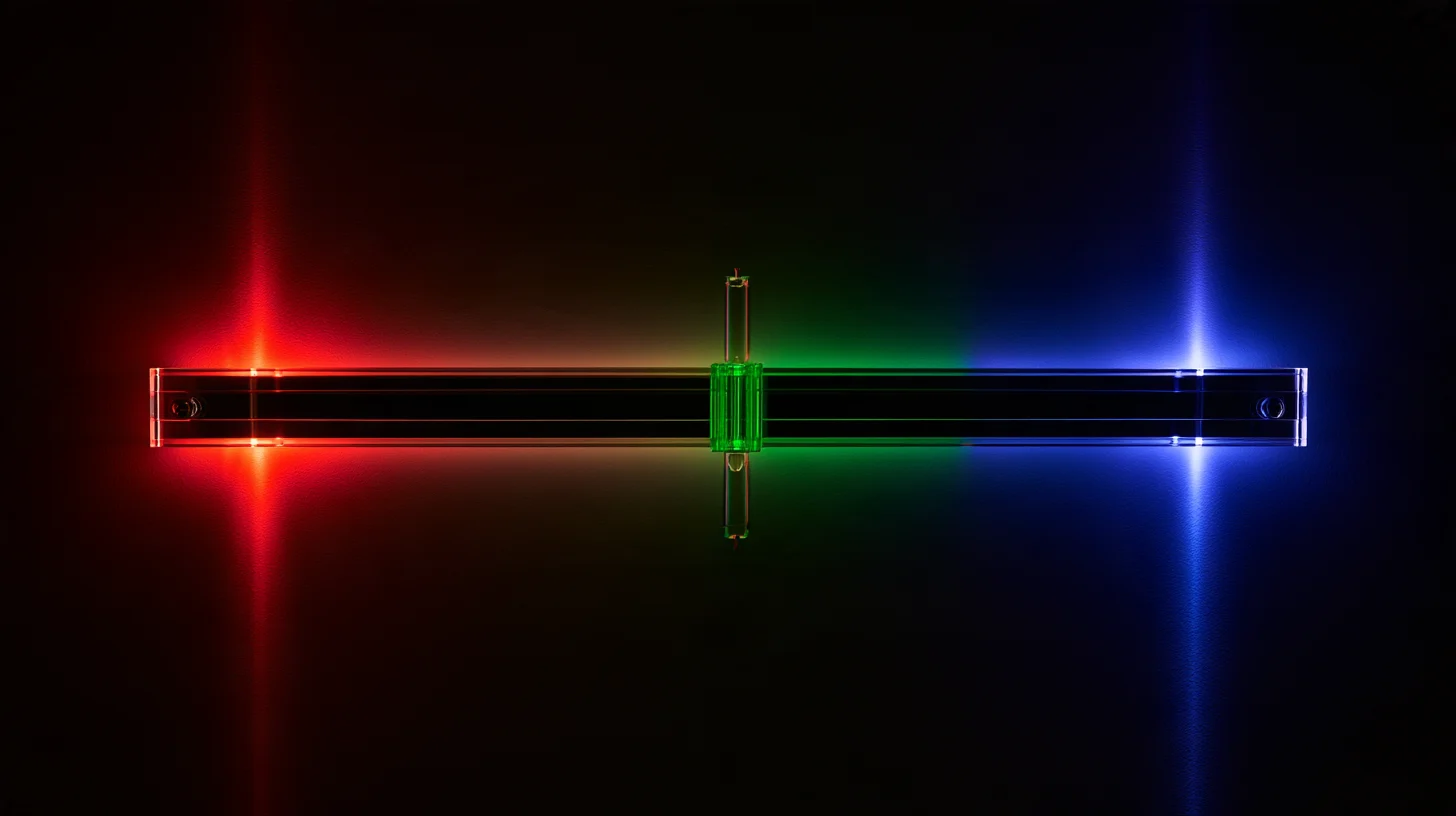
We placed each pin from what the makers themselves say. The pivot is who put the mark there, not how machine-like the text feels.
- a C2PA credentialwritten inside the file itself
- SynthID on Google outputonly the models that embed it
- the same watermark, after a rewrite or translationconfidence scores greatly reduced
- a statistical text detectorits own maker shut it down
This spectrum is about where a file came from, not about how good the text is. The absence of a mark proves nothing.
Last checked: Facts and tool names in this lesson are re-checked against their sources on this date.
Two questions that keep getting mixed up
The first question is: did a machine make this file? The second is: did a machine write this text? They look alike and they are not the same kind of question at all. The first sometimes has a mechanical answer, because the maker may have put a mark inside the file that somebody can go and find. The second has no mechanical answer, and nobody has produced one yet.
All of the confusion in this field starts there. The market sells the second question and, at best, delivers part of the first. A tool that tells you eighty two percent likely AI is not answering the second question; it is handing you a statistical similarity score and you are reading it as a verdict.
Our position in this lesson is clear from the start. If you are going to make a decision on the strength of something, that something has to be showable: a mark inside the file, a source that opens, a number that is still the same number where it came from. A score you cannot open up and trace was not built to decide anything.
Why OpenAI shut down its own detector
An AI text detector is a program that reads a piece of writing and guesses whether a machine or a person produced it. In January 2023 OpenAI released one of its own. In July of the same year a note appeared at the top of that same page: "As of July 20, 2023, the AI classifier is no longer available due to its low rate of accuracy."
Sit with that sentence, because it carries most of this lesson. The company that built the model, had access to its training data, wrote its tokeniser and could generate as much of its output as it liked, could not build a detector it was willing to stand behind. Anyone selling you such a tool today has less access than that company had, not more. There is one tool in this field whose story ends differently: its own maker shut it down. That tool is the statistical text detector.
The first version of that page also carried some accuracy figures. We have not printed them here, because the OpenAI domain returns a 403 to this server and we do not publish a number we could not read at its source. The discontinuation sentence itself we cross-checked against two independent reports, and the link to the original page is at the foot of this lesson so you can open it yourself. If it strikes you as odd for a teaching page to drop a number that was right there, that is the same rule we set out in the lesson on AI hallucination.
What a detector does to someone whose first language is not English
A study published in the journal Patterns tested several widely used detectors on writing samples from native and non-native English writers. The finding is blunt: the detectors consistently misclassified the non-native samples as AI-generated, while the native samples were correctly identified. The authors conclude that these tools may unintentionally penalise writers with more constrained linguistic expression, and they caution against using them in evaluative or educational settings.
Be precise here, because the temptation to overreach is strong. That study is about non-native English writing, not about Persian. We have seen no published evaluation of these tools on Persian text and we are not going to claim one. But the mechanism behind the finding is not tied to any one language: these tools are tuned on a distribution, and writing that sits outside that distribution gets flagged.
And one more sentence from the same paper, less often quoted: the authors showed that simple prompting strategies both reduce the bias and bypass the detectors outright. We are not going to say what those strategies were, here or anywhere else on this site. Nor do we need to; the point is a single line. A control that a simple instruction defeats is not a control. Whoever wants through gets through, and the person who gets caught is the writer who did not know there was anything to get through.
How to read the number a detector gives you
Suppose you have a hundred texts, ten of them machine-written, and a detector that is right nine times out of ten in both directions. It catches nine of the ten machine texts. But the same error rate also runs across the ninety human texts and accuses nine more people. So of the eighteen flags raised, nine are a person who wrote their own work. Those two numbers are an arithmetic example, not a measurement of any product. What survives whatever the real numbers turn out to be is this: the rarer the thing you are hunting, the larger the share of the innocent among the caught.
Now put the cost of the two mistakes side by side, because they are not equal. If a machine-written text slips past you, an unremarkable page got published. If you wrongly accuse a writer, you have called someone a liar. Those two cannot be governed by one threshold, and wherever the costs are asymmetric the thresholds have to be asymmetric too.
So what do you actually do. A detector score is at most a hint to look more closely, never a conclusion. If the score is high, go to the things that really can be checked: open the claims in the text, read its sources, ask the writer how they arrived at that conclusion. What comes out of that conversation is defensible. The number is not.
Two errors, two very unequal costs
A single threshold governs both pans at once. When the costs are this asymmetric, that single threshold is the problem.
A writer wrongly accused
- You have told someone their work is not theirs
- To defend themselves they have nothing but their word
- Non-native writing gets caught more often
- It is close to impossible to undo
A machine text that slips past
- An unremarkable page got published
- If it is worthless the reader works it out
- A later edit can still catch it
- Nobody has been accused of anything
This drawing claims no rate. It only says the two errors are not the same kind of thing.
The marks you really can check
The green end of the spectrum is where the maker put a mark there on purpose. It has two families and the difference matters: a watermark is embedded inside the content itself, while a content credential is a package of information attached to the file. Both are written inside the file itself, and anyone holding the file can go looking for them.
SynthID belongs to Google DeepMind and, on their own page, covers image, video, audio and text: image, video and text in the Gemini app and web experience, audio in Lyria and in the NotebookLM podcast feature. Google own safeguards documentation states the limits in the same place, and they are worth reading. Watermarking is less effective on factual responses, because there is less room to alter generation without hurting accuracy. A thorough rewrite, or a translation into another language, leaves detector confidence scores greatly reduced. The method is robust to cropping pieces of text, modifying a few words, or mild paraphrasing. And in their own words, SynthID Text is not designed to directly stop motivated adversaries from causing harm. A production-grade implementation has been available in Hugging Face Transformers since version 4.46.0, so this is no longer technology behind closed doors.
The second family is C2PA, an open standard for attaching a signed credential to a file. On the day we wrote this lesson, its membership page listed eleven organisations on the steering committee, among them Adobe, Amazon, the BBC, Google, Meta, Microsoft, OpenAI, Sony and TikTok. How to read a file credential on your own machine, and what turned up when we ran that over this site own media library, is in the lesson on AI image watermarks and SynthID, with the command.
And now the limit that defines this whole end of the spectrum: a mark covers only the models that embed it. A model that does not watermark leaves no mark at all, and a credential attached to a file dies to a plain screenshot. So the absence of a mark proves nothing. These marks speak in one direction only, and that one direction is still worth having.
If you publish: what to do instead of chasing detectors
An editorial team that spends its time getting past detectors has built its process around the wrong thing. Three things about your own publishing really are checkable: a named person who stands behind the piece and answers for it, claims with source links that actually open, and disclosure wherever not knowing would change what the reader concludes. None of the three needs a tool.
This does not fight Google policy either, because Google policy is not about the tool at all; it is about producing pages at scale that add nothing for anyone. Where that line falls and what the official text says is in the lesson on AI content and SEO, with the policies linked.
And one hard rule that is easier to write than to follow: do not accuse a writer on a detector score. If you would not fire someone on that number, do not reject their work on it either. If you genuinely are suspicious, do what an editor has always done: sit down and ask questions about the work itself. Somebody who understands the subject will answer them.
Ask this instead of "is it AI?"
Something has arrived and you have to decide about it. First work out which kind of thing you are holding.
- Look for a C2PA package inside the file
- Read the producing tool and the digital source type
- An empty result means unknown, not no
Check its claims, not its author
- Open every link and see if it says the same thing
- Read the numbers again at the original source
- See whether a named person answers for it
Neither branch tells you who wrote it. Both tell you whether the thing stands behind what it says.
If you are the reader: what to look at
Your gut is the worst guide here, because it is sensitive to something that has nothing to do with origin: fluency. Fluent writing can be a machine or a good writer, and lumpy writing can be a person or a weak model. Fluency is exactly what these models were optimised for, so it is not a signal at all.
Look at four things instead, in this order. Does the page name a person who answers for it. Do its claims carry links, and do those links actually open and say the same thing. Is the number quoted still the same number at the original source. And if it is a file, does it carry a credential. None of the four tells you who wrote it, and none of them is meant to; they tell you whether the page stands behind what it says, which is the question your decision actually rests on.
And the boundary of this lesson, stated plainly: you will not learn here how to write text that gets past a detector, and you will not learn how to accuse someone. Those are one mistake from opposite ends, and both are built on the same false premise, that the number knows something. It does not.
The fast path, with AI
The fast path here is not to drop the text into a detector. What a professional does is <strong>look at the document own metadata first</strong>, because a Word or PDF file usually states outright which tool made it and how many minutes were spent on it. This needs no service at all and takes seconds. We ran exactly this on a Word file that ships with an editor extension installed on this server, and its properties said plainly that a programming library had generated it, with zero minutes of editing time and one revision.
- Open the Word file and read its two property sheets. Total editing time and revision number are the two figures that say the most.
- For a PDF, read the creator and producer fields. The name of the tool is usually written right there.
- Take whatever you find as a lead, not a verdict. Then go to the claims in the text itself; that is where the decision is actually made.
Copy-ready recipe
# 1. The properties of a Word file. A .docx is really a zip.

unzip -p {file}.docx docProps/core.xml
unzip -p {file}.docx docProps/app.xml

# Four things to look for in the output:
#   dc:creator      who or what made the file
#   cp:revision     how many times it was saved
#   TotalTime       total editing time, in minutes
#   dcterms:created creation date; do not trust this one, see below


# 2. The properties of a PDF.

pdfinfo {file}.pdf | head -5


# 3. If it is an image, read the watermark lesson instead:
#    /learn/graphic-design/ai-image-watermark/
Before you trust the output: This metadata speaks about the tool, not about the author. The very file we opened shows it: its creation date read 2013, while the file itself was placed inside that extension in 2026. That date is the default in the library template, not a real one. So an editing time of zero means this document was not typed in Word, and nothing more. A person may have written the text elsewhere and pasted it in. Three further things to know: an empty result rules nothing out, every save rewrites part of this trail, and if you are deciding about a person on this output you have exactly the problem set out in the third part of this lesson. It is a lead, not evidence.
AI in this kind of work
We take a blunt position here that plenty of people dislike: for this task, a chatbot is the wrong tool. Drop a text into a model and ask whether AI wrote it and you will get an answer, a confident one, with nothing behind it; the model has no way of knowing. The same tool is genuinely useful for a different question: which claims in this text are checkable, and where is the source for each.
Tools that actually help
- Gemini The only entry here with an official check: Google DeepMind own page says to upload the file to Gemini and ask whether it was created or altered by Google AI. It only catches Google model output. Iran is not on the supported-countries list for the Gemini app; we read that on Google own page rather than measuring it.
- NotebookLM For checking claims, not for detection. It answers only from sources you upload yourself and points each sentence back at the source, so you can see where a statement came from. Google own help says it works in the same regions as the Gemini app, and Iran is not on that list.
- Claude Useful for that same claim-extraction pass, especially when you tell it explicitly to work only from the text given and add nothing from its own knowledge. Iran is on neither of Anthropic two supported-countries lists; we read that on their own page.
Where it backfires
Three specific risks. First and most important: do not ask a language model whether a text is machine-written. The model has access to no mark at all and has been trained to answer anyway, so it produces a confident answer with nothing under it; the mechanism is in the lesson on AI hallucination. Second: deciding on a detector score, when the Patterns study showed these same tools consistently misclassify non-native English writing and its authors explicitly cautioned against use in evaluative and educational settings. Third: a client unpublished draft is their text, not yours; whether a conversation is used for model training depends on the plan and the settings of that service and is written on their own page. None of these three is a factor in Google ranking, and we make no such claim.
Sources: OpenAI: New AI classifier for indicating AI-written text Liang et al., GPT detectors are biased against non-native English writers (Patterns) Google DeepMind: SynthID Google: SynthID Text, scope and limitations C2PA: membership and steering committee Google: where the Gemini apps are available
Where this advice stops
The boundary of this lesson has to be stated outright. We have tested no detector ourselves and we publish no detection rates, because we have no defensible source for any. We also have no way to detect SynthID, so every sentence here about it is a quotation from Google rather than a measurement of ours, its durability claim included. The Patterns study is about non-native English writing, not Persian; we have seen no published evaluation on Persian text and we record that as a limit of our own knowledge. And a final boundary that outranks the rest: nothing in this lesson is sufficient for a court, a university disciplinary panel or a hiring decision. Those places need a standard of proof, and a probability, however high, is not proof.
From our own work
We do run a mechanical detector over our own writing, and we are putting its numbers here because they show exactly what this lesson argues. On the day this lesson was written, the forbidden-character grep from section two of this site writing rules ran over eighty six published posts and pages and answered in under a second: thirty six of them carry at least one forbidden character, three thousand two hundred and eighty three zero-width non-joiners between them. Now the same grep over the ninety one data files of this Learn section: three zero-width non-joiners, all three in one file, the Persian typography lesson, which has to show the character in order to teach it. And here is where it turns around. That character is correct Persian typography; we banned it in our own rules because it is invisible and because flawlessly consistent use of it is itself a machine tell. So the same grep tells us precisely which byte sits where, and tells us nothing whatsoever about who wrote the page. The gap between those two things is the entire subject of this lesson.
Real follow-up questions
What do I do if a detector says my text is AI-written?
Do not argue with the number, because it cannot be opened up. Show what can be: the sources you read, earlier drafts, your notes, and an account of how you reached the conclusion. If the other side has nothing but that score, the burden of proof is theirs.
Is a zero-width non-joiner or a long dash a sign of AI?
No. They are the mark of a tool or a typing habit, not of an author. Word makes long dashes on its own, and any proper Persian keyboard produces the zero-width non-joiner. We ban them in our own rules, but for legibility and consistency, not so that anyone can be accused with them.
Does Google itself detect AI text?
Nobody outside Google sees inside the ranking systems, so any answer to this is a guess. What is written down and can be read is the official policy, and that is about producing unhelpful pages at scale, not about which tool wrote the text. The detail, with the policies linked, is in the lesson on AI content and SEO.